
Quick Overview: A solar microinverter is a compact converter installed beneath each photovoltaic panel, converting direct current (DC) into alternating current (AC) on an individual basis.
Unlike a central inverter, it optimizes energy production panel by panel: if one module is shaded, the others continue operating at full efficiency.
Its lifespan typically ranges from 20 to 25 years (compared with around 10 years for a central inverter), with manufacturer warranties of up to 25 years. Unit prices generally range from €150 to €400 excl. VAT.
Edmond Solutions installs Enphase IQ8 microinverters across the Var and Alpes-Maritimes regions.
The solar energy sector is evolving rapidly, driven in part by the rise of solar microinverters.
These devices are attracting growing interest from homeowners, businesses, and public organizations across the Var and Alpes-Maritimes looking to maximize the output of their photovoltaic systems.
Understanding the role of a microinverter in a solar installation, exploring its practical benefits, comparing its performance with that of central inverters, and reviewing key selection criteria and pricing are all essential steps toward making a successful energy transition.
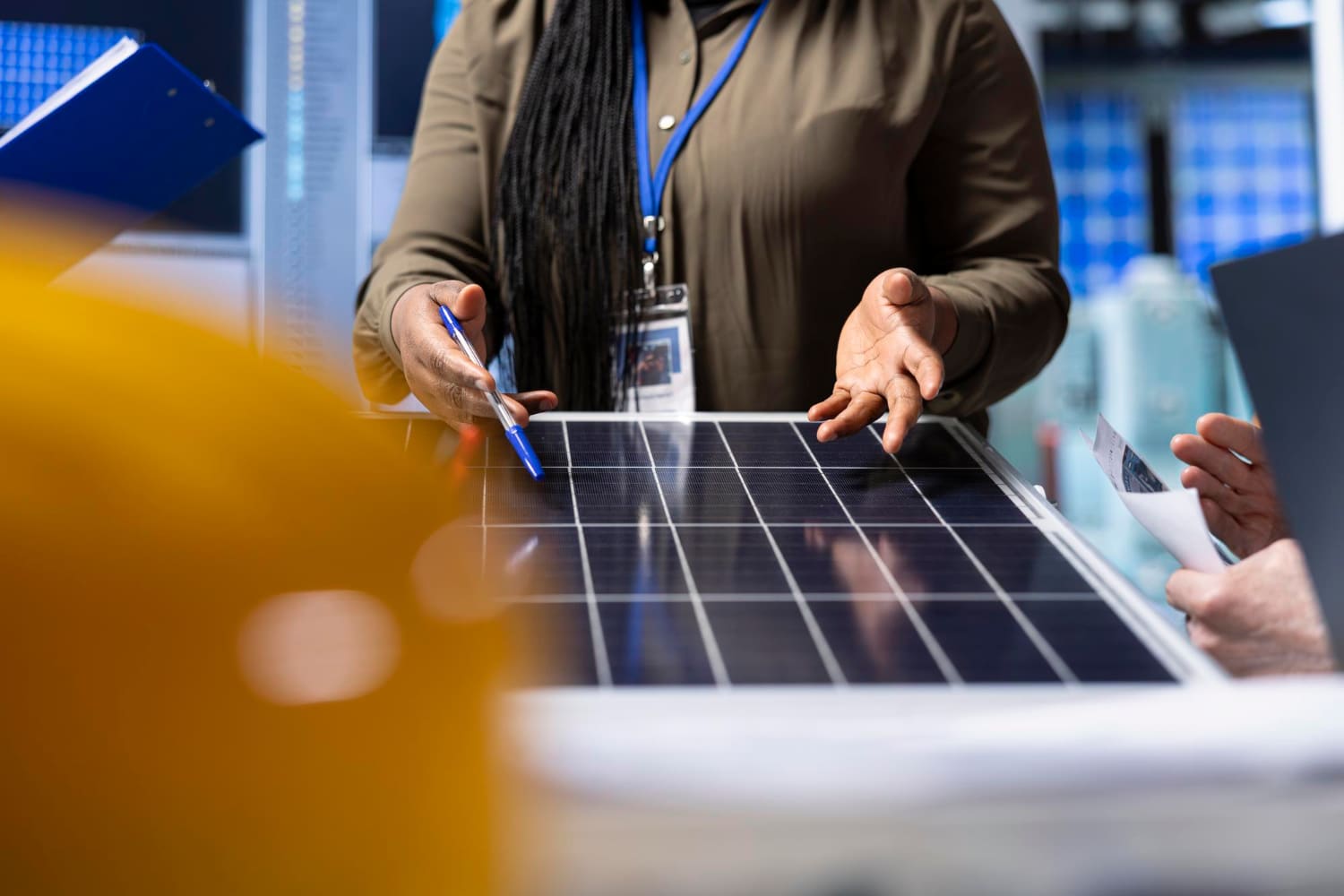
Microinverters: definition and how they work
A solar microinverter is a compact device installed directly beneath each photovoltaic panel. Its main function is to convert the direct current (DC) generated by the panel into alternating current (AC) that can be used by the home or fed into the electrical grid.
This conversion takes place in real time, helping to minimize energy losses. The best-performing models, such as the Enphase IQ8 range, can achieve up to 97% European efficiency.
In France, all newly installed microinverters must comply with the EN 50549-10 standard, which has been mandatory since 2026.
At the heart of microinverter technology is panel-level optimization. Unlike a central inverter, which manages all solar modules from a single point, a microinverter processes each panel individually.
As a result, the performance of one panel is no longer dependent on the others, making it possible to optimize solar output even when part of the system is affected by shade.
Key functions of a solar microinverter
- Converts DC to AC directly beneath each solar panel
- Enables individual panel performance optimization (up to 97% efficiency)
- Provides accurate panel-level monitoring
- Complies with EN 50549-10, mandatory in France since 2026
Thanks to this technology, each unit operates independently. If a leaf, debris, or temporary shading affects one module, only that panel’s production is reduced—without impacting the rest of the installation.
For large-scale residential, commercial, or industrial projects, high-output models such as the Enphase IQ8P Microinverters offer excellent integration in more demanding environments and are fully smart grid ready.
Microinverters vs Central Inverters: what are the key differences?
The fundamental difference between microinverter technology and a central inverter system lies in how the power conversion is structured.
A central inverter aggregates all solar panels and converts electricity at a single point (average lifespan: 10 years). In contrast, a microinverter system performs conversion directly beneath each panel (lifespan: 20 to 25 years, with warranties of up to 25 years).
Key differences
- Centralized vs decentralized optimization
- System performance limited by the lowest-performing panel with a central inverter
- Targeted maintenance and optimization with microinverters
- Longer lifespan: 20–25 years vs ~10 years for central inverters
- With a conventional system using a central inverter, a drop in performance on a single panel reduces the output of the entire string.
This is not the case with solar microinverters, as each unit manages conversion independently.
As a result, overall solar production is significantly improved with microinverters—especially on complex rooftops, multi-orientation installations, or areas exposed to temporary shading.
Another key advantage is scalability. Adding new panels is much easier: each additional module comes with its own microinverter, allowing for modular system expansion without reconfiguring the entire installation.
The Benefits of Microinverters in a Photovoltaic System
Far more than just a technical component, the microinverter has become a key part of modern local energy transition projects.
Its advantages address several major priorities: maximizing solar energy production, improving system reliability, and protecting the long-term value of your investment.
Key advantages of solar microinverters
- Enhanced safety: less high-voltage DC running under the roof, reducing fire risk
- Advanced monitoring down to the individual panel
- Automatic optimization even with changing sunlight conditions or temporary shading
- Long lifespan of 20 to 25 years, with manufacturer warranties of up to 25 years (Enphase)
- Very low failure rate: < 0.5% per year
From a safety perspective, installing a microinverter beneath each panel significantly reduces the amount of high-voltage DC electricity circulating under the roof.
This greatly lowers the risk of electrical fire, which is especially valuable in solar installations exposed to high summer temperatures, such as those commonly found in southern climates.
How to choose the right microinverter for your project
Selecting the right solar microinverter requires evaluating several key parameters.
The first and most important criterion is power compatibility between the microinverter and the associated solar panel. Since 2026, it is also essential to ensure compliance with the EN 50549-10 standard, which is mandatory for all new installations in France.
Other factors—such as resistance to environmental conditions—also play a crucial role in the decision-making process.
In regions like the south of France, where installations are exposed to heat, humidity, and coastal salt air, choosing durable and reliable equipment is essential. This is a key consideration systematically integrated into the recommendations of Edmond Solutions, a locally certified RGE QualiPV installer operating in the Var and Alpes-Maritimes.
Key selection criteria
- Power rating compatibility with your solar panels
- Number of inputs (a microinverter can support one or multiple modules)
Compliance with EN 50549-10 (mandatory in France since 2026) - Built-in monitoring features for performance tracking
Warranty terms and duration (target 20–25 years) - Resistance to environmental conditions (heat, humidity, coastal environments)
Solar microinverter pricing and available pptions
The cost of a solar microinverter depends on several factors, including its power rating, features, and number of inputs.
For a typical residential installation (3 to 9 kWp), you can expect to invest between €1,200 and €3,600 for the full set of microinverters. This represents an additional cost of around 15% to 30% compared to a central inverter system.
However, this price difference is offset by key long-term benefits:
- A longer lifespan (20–25 years vs ~10 years)
- Simplified maintenance
- Improved overall system performance
Type of solar microinverters | Inputs | Price range HT | Features |
|---|---|---|---|
Standard single-phase | 1 | 140 € – 180 € | Basic monitoring |
Dual-input single-phase | 2 | 170 € – 230 € | Enhanced monitoring |
Three-phase (commercial) | 3-4 | 250 € – 400 € | Advanced monitoring, network communication |
Additional accessories, such as communication gateways for remote monitoring, may also be added to the overall system cost.
Edmond Solutions supports you in choosing the right microinverter for your project and for the specific requirements of your installation in the Var or Alpes-Maritimes.
Request your free solar assessment today.

Frequently asked questions about solar microinverters and their uses
What is a solar microinverter and how does it work?
A solar microinverter is a small electrical device installed beneath each photovoltaic panel. Its role is to convert the direct current (DC) generated by the panel into alternating current (AC) compatible with the home’s electrical system.
Each microinverter operates independently at the panel level, allowing for optimized performance across the entire solar installation.
Its typical lifespan ranges from 20 to 25 years, with manufacturer warranties of up to 25 years (Enphase). Efficiency can reach up to 97% with high-performance models such as the Enphase IQ8 series.
What are the main advantages of microinverters compared to central inverters?
Solar microinverters provide better solar energy optimization because a drop in performance on one panel does not affect the rest of the system.
They also offer more detailed monitoring, improved electrical safety by reducing high-voltage DC exposure, and a significantly longer lifespan—typically 20 to 25 years, compared to around 10 years for a central inverter.
Main advantages
- Maximized energy production, even with partial shading
- Targeted monitoring and maintenance
- Easier system expansion and servicing
How do I choose the right microinverter for my solar installation?
Make sure the microinverter you choose is compatible with the power output of your installed solar panels, complies with the EN 50549-10 standard (mandatory in France since 2026), includes suitable monitoring features, and can withstand local environmental conditions such as heat, humidity, and coastal salt exposure.
What to check
- Panel-to-power compatibility
- Compliance with EN 50549-10 (2026)
- Built-in monitoring
Durability and warranty coverage (20–25 years)
What budget should you expect for a solar microinverter?
The price of a solar microinverter generally ranges from €140 to €400 excl. VAT, depending on the type, power rating, and features.
For a complete residential installation (3 to 9 kWp), you should expect a total cost of around €1,200 to €3,600.
This represents an additional investment of around 15% to 30% compared to a central inverter, but the extra cost is offset by its longer lifespan and simplified maintenance.
Keep in mind
- Include the cost of monitoring tools and accessories
- The investment is balanced by higher energy yield and a 20–25 year lifespan