
In brief: Connecting solar panels to the grid involves four mandatory steps: obtaining planning permission from your local authority, having the system installed by a certified RGE professional, securing the Consuel certificate (€195.20 incl. VAT in 2026), and submitting the grid connection request to Enedis.
For a typical self-consumption system with surplus energy export, equipped with a Linky smart meter—which applies to around 95% of homeowners in the Var and Alpes-Maritimes—Enedis connection fees are €50.10 incl. VAT in 2026.
Commissioning usually takes between 4 and 12 weeks.
Edmond Solutions, a certified RGE QualiPV installer with over 15 years of experience in the PACA region, handles the entire administrative process on your behalf.
Connecting your solar panels to the grid is a key step in any photovoltaic installation project.
To ensure the safety, compliance, and performance of your system, it is essential to follow a structured process that takes into account both legal requirements and technical aspects related to electrical connection.
Whether you are a homeowner, a business, or a public organization in the Var or Alpes-Maritimes, this guide walks you through each essential step, outlines the real costs in 2026, and answers the most common questions to help you successfully connect your system to the electrical grid.
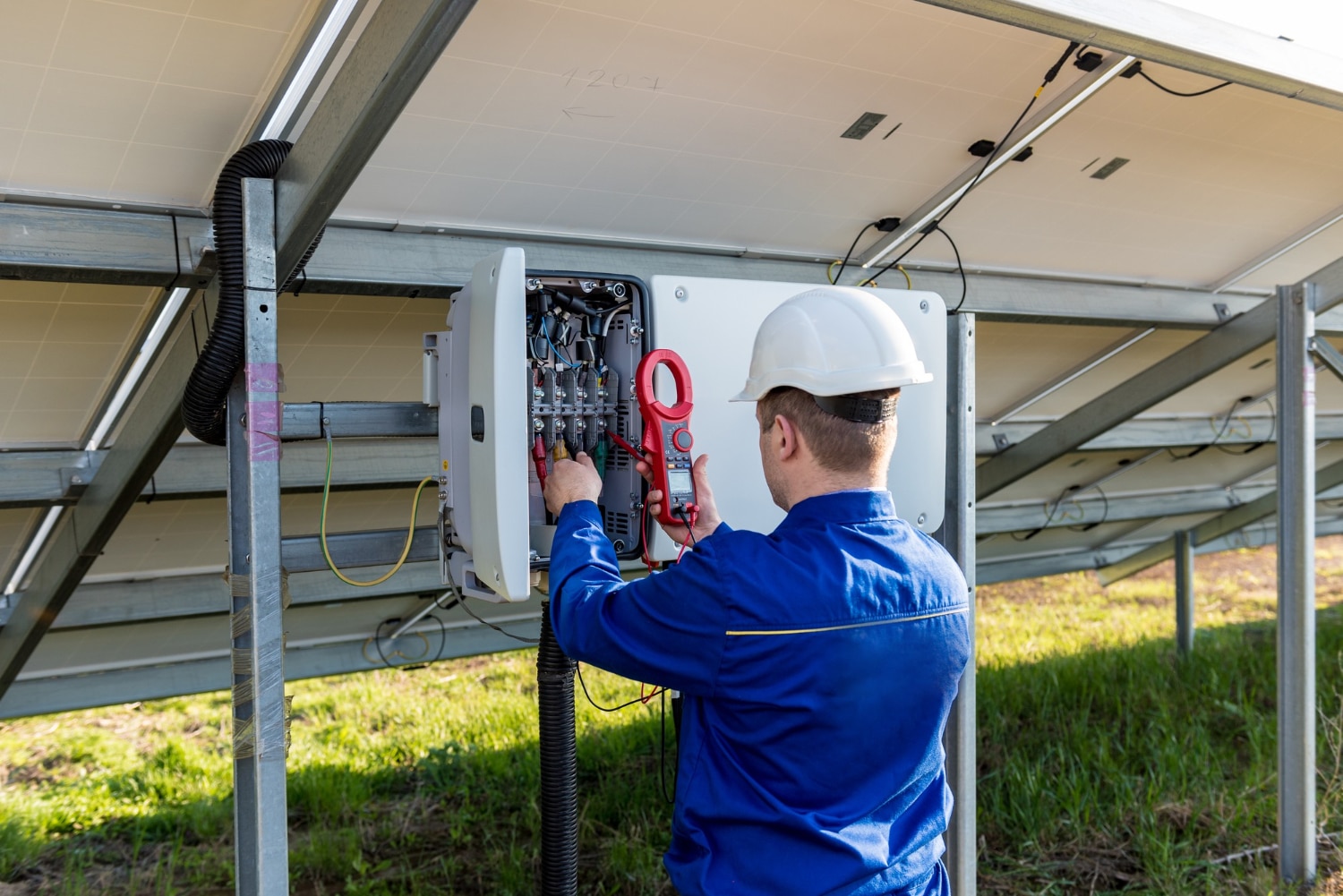
The main steps for connecting solar panels to the grid
Installing photovoltaic panels involves much more than simply mounting them on a roof or on the ground.
The success of the project depends on a well-managed grid connection process, which is essential to ensure the safety of the installation and to make full use of the energy produced.
This process generally includes several key stages, from the initial assessment through to the official commissioning by the electricity network operator.
Each phase must be carefully planned to avoid administrative or technical delays.
Feasibility study and planning permission application
Every photovoltaic installation begins with a full assessment of the project’s technical and regulatory feasibility.
This includes checking whether the site is suitable—particularly the roof structure, orientation, and any potential shading obstacles—as well as ensuring compliance with local planning regulations and submitting the required preliminary works declaration to the local authority, or in some cases a building permit.
In protected or listed areas within the Var and Alpes-Maritimes, additional constraints may apply. Edmond Solutions is familiar with these local requirements and can help secure this phase of the project.
This stage also includes estimating the site’s solar potential (sunshine levels exceed 2,700 hours per year in the Dracénie area), verifying the structural condition of the building, and choosing the system’s operating model: self-consumption or grid export.
That choice will directly determine the next steps in the grid connection process.
Technical preparation for the electrical connection
Once planning approval has been obtained, the next step is the physical installation of the equipment: solar panels, solar inverter, protection box, solar panel wiring, and a dedicated meter for either exported electricity or self-consumed energy.
These components form the foundation of a safe, reliable, and compliant solar system.
The selected equipment and its configuration must comply with the NF C 15-100 standard in order to minimize any risk of electrical issues.
In addition, the inverter must comply with EN NF 50549-1.
Using a certified RGE professional installer is strongly recommended to ensure that the electrical connection is fully compliant—and it is also essential if you want to qualify for government incentives and subsidies.
Understanding the administrative steps for connecting solar panels
Any grid connection project involves several administrative procedures, with different stakeholders depending on the type and capacity of the installation.
Planning these steps in advance can save a significant amount of time.
Before a photovoltaic system can be connected to the grid, it is essential to obtain a Consuel certificate, which confirms that the electrical installation complies with current safety standards.
Submitting a grid connection request to Enedis is another key step, and it is mandatory for commissioning any photovoltaic installation connected to the public electricity network.
Preparing the grid connection application
After installation, you must prepare an application file including:
- The grid connection application form submitted to Enedis (available online via the Enedis portal)
- A single-line diagram detailing the electrical connection
- Proof of planning permission or confirmation of administrative submission
- A signed quotation if a professional installer is involved
- Technical specifications for the equipment (particularly the solar inverter)
This file is then submitted to Enedis, which reviews the application before issuing a technical and financial proposal outlining the conditions and timeline for the grid connection works.
Tracking progress and obtaining final commissioning
Once the application has been approved, Enedis schedules an appointment with the installer to carry out the actual grid connection.
Depending on the size of the installation and the complexity of the site, this stage typically takes between 4 and 12 weeks. It may involve installing a new Linky smart meter or adapting the existing one.
The final step is to obtain the official commissioning approval.
This confirmation certifies that the installation is operating correctly, complies with all applicable electrical standards, and is legally authorized to produce and export electricity to the grid.

What are the costs associated with connecting solar panels to the grid?
The cost of connecting solar panels to the grid depends on several factors, including:
the installed system size
the chosen operating model (self-consumption or full export)
whether the property is already equipped with a Linky smart meter
and the distance between the installation and the grid connection point
For a standard residential installation with a Linky meter—which is the most common setup in 2026—Enedis connection fees for a self-consumption system with surplus export are €50.10 incl. VAT (remote commissioning with no technician visit required).
Without a Linky meter, or in the case of full export, costs generally range from €200 to €1,496 incl. VAT, depending on the existing electrical configuration.
The Consuel certificate, which is mandatory for any installation exporting electricity to the grid, costs €195.20 incl. VAT in 2026.
For larger systems (over 36 kWp), pricing is determined through an Enedis quotation and may rise to several thousand euros if reinforcement of the local grid is required.
Some off-grid or non-export systems (equipped with a CACSI and no injection to the grid) can avoid Enedis connection fees altogether, but they require specific investment in battery storage and energy management.
Edmond Solutions helps you assess the exact cost of your project and optimize your return on investment.
Legal requirements and differences between grid connection and energy autonomy
In France, any installation connected to the public electricity grid must comply with strict regulatory requirements.
From administrative procedures to personal safety and environmental protection, every stage of the grid connection process is governed by legal standards.
Complying with standards and obtaining Consuel certification
Your solar installation cannot be commissioned without a certificate of compliance issued by Consuel (€195.20 incl. VAT in 2026).
This inspection covers the electrical connection and key safety components such as the protection box, ensuring that the installation meets the required quality and safety standards.
Skipping this step can result in a refused grid connection and may expose the property to genuine electrical risks.
Working with Edmond Solutions, a certified RGE QualiPV installer operating in the Var and Alpes-Maritimes, helps ensure full compliance with all procedures while also reducing the risk of domestic electrical incidents.
Grid connection or off-grid system: which option should you choose?
Choosing a grid-connected solar system offers two main advantages:
- Guaranteed access to a continuous electricity supply, regardless of the weather or season
- The ability to export surplus energy for compensation (under the EDF OA 20-year contract) or maximize self-consumption to reduce your electricity bills
A fully off-grid solar system, on the other hand, requires suitable battery storage, smart energy management, and regular monitoring of stored power.
As a result, going fully autonomous generally involves a higher upfront investment and a greater level of system oversight.
In either case, working with Edmond Solutions, a local solar energy expert serving the Var (83) and Alpes-Maritimes (06) for over 15 years, provides real added value when balancing regulatory compliance and energy performance.
Request your free personalized solar assessment today.
Frequently asked questions about solar panel grid connection
What administrative steps are required to connect solar panels to the grid?
A grid-connected photovoltaic installation first requires planning approval, usually in the form of a preliminary works declaration submitted to the local authority.
You must then submit a grid connection request to Enedis, along with the full technical and administrative documentation.
Finally, you need to obtain the Consuel certificate (€195.20 incl. VAT), which confirms that the electrical connection complies with current standards.
Key steps
- Preliminary works declaration or building permit, if required
- Technical application file submitted to Enedis
- Consuel approval before final commissioning
What is the actual cost of grid connection in 2026?
For a home equipped with a Linky smart meter and operating under self-consumption with surplus export—which is the most common setup—the Enedis connection fee is €50.10 incl. VAT in 2026.
Without a Linky meter, or in the case of full export, costs typically range from €200 to €1,496 incl. VAT, depending on the existing electrical setup.
You must also add the Consuel compliance certificate, which costs €195.20 incl. VAT.
For larger systems (over 36 kWp), the final cost is determined through an Enedis quotation.
Key points
- Application and connection fees are included in the commissioning process
- Consuel certificate: €195.20 incl. VAT (2026)
What benefits does grid connection offer to a solar user?
The main advantage is energy security: your home continues to benefit from a reliable electricity supply, even when solar production is low.
Grid connection also allows you to sell surplus electricity through EDF OA (under a 20-year purchase agreement) or to maximize your self-consumption and reduce your energy bills.
It also gives you access to certain government incentives, such as the self-consumption bonus and reduced VAT.
Key benefits
- Reliable electricity supply
- Ability to monetize excess solar energy (EDF OA – 20-year contract)
- Access to government support schemes (self-consumption bonus, 10% reduced VAT)
Is it mandatory to hire a certified professional installer?
There is no strict legal requirement to hire a certified installer. However, working with a certified RGE professional (QualiPV, Qualibat, Qualifelec, etc.) is essential if you want to benefit from government incentives, such as the self-consumption bonus, reduced 10% VAT, and EDF OA feed-in tariffs.
Hiring a professional also ensures that your installation meets all required standards and helps speed up the process of obtaining the Consuel certificate.
Key benefits
- Guaranteed compliance and enhanced safety
- Access to government incentives reserved for RGE-certified installers
- Administrative support for your grid connection application with Enedis