
Advantages and Drawbacks of This Alternative Storage Method
In a world undergoing an energy transition, photovoltaic installations are emerging as a sustainable and cost-effective alternative. But to make the most of this technology, a detailed analysis of your electricity consumption habits is essential. This step determines the ideal solar solution for you — self-consumption with resale, self-consumption with storage, or full resale.
Today, let’s take a closer look at solar self-consumption with virtual storage. This innovative option allows users to achieve maximum energy autonomy. Wondering if this configuration is right for you? We explain everything in this article.
How Virtual Solar Batteries Work — in Short
Virtual batteries represent a major step forward in managing solar energy production. Unlike physical batteries that store green electricity on-site, virtual batteries operate in the cloud and are based on an “energy balance” system between produced and consumed energy.
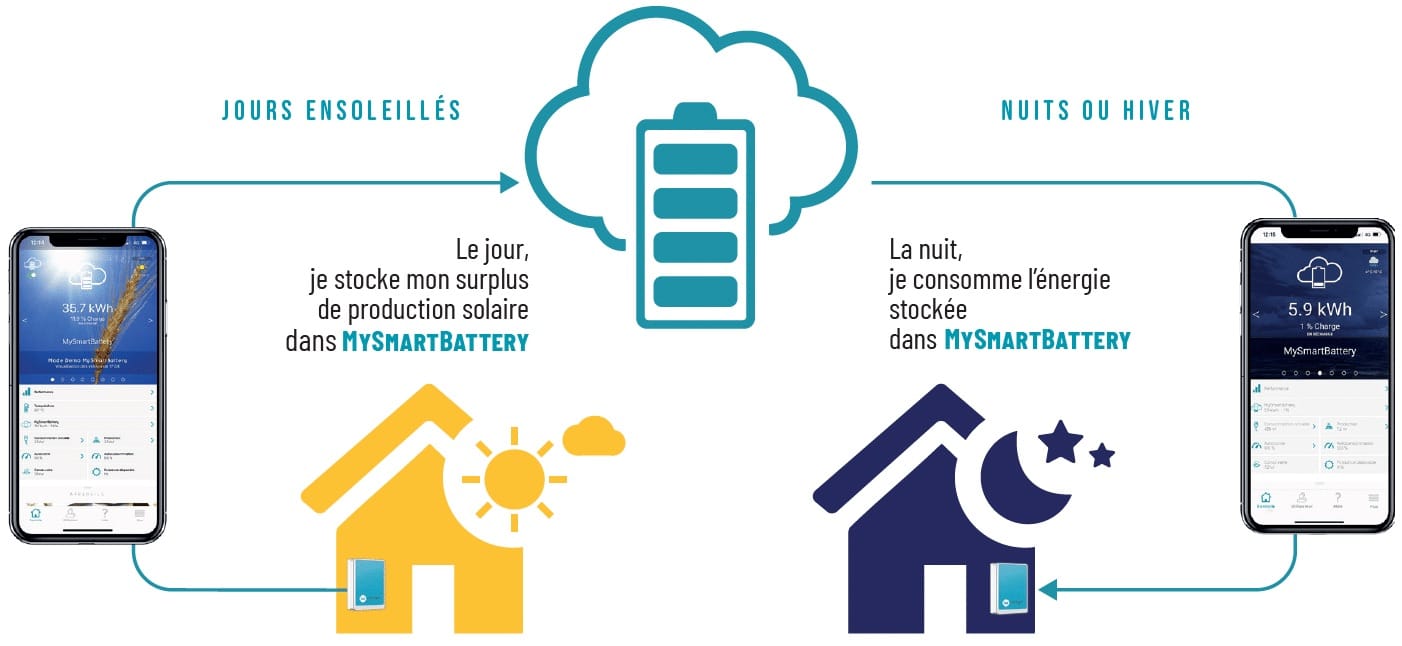
- During the day, your solar panels produce electricity that you consume instantly based on your needs.
- When sunlight conditions allow for higher energy production than your current consumption, the surplus is measured in your virtual battery and simultaneously reinjected into the public grid.
- At night or during winter, when your solar panels produce little or no energy, you use the surplus electricity previously generated.
Virtual Solar Batteries: Advantages and Drawbacks
The advantages of virtual batteries are numerous:
- Energy savings through maximum use of solar energy and reduced dependence on the public grid.
- Profitability in the face of rising electricity prices and decreasing solar feed-in tariffs from EDF OA.
- Flexibility, as virtual battery storage adapts to seasonal variations in production and energy needs (day/night, summer/winter) without requiring additional physical installation, which usually has limited storage capacity.
- Lower cost compared to installing physical batteries.
- Optimized environmental impact with a reduced carbon footprint, thanks to better energy management and the elimination of polluting materials (physical batteries are generally made from lead or lithium).
Of course, with advantages come disadvantages. No solution is ever 100% perfect! Here are the key points to consider before choosing virtual storage for your solar energy system:
- No self-consumption bonus or feed-in tariff protection.
- Subscription required with the virtual battery provider and, in some cases, additional costs for transferring surplus energy back from the public grid.
- No power supply in case of an outage, unlike physical batteries that take over automatically.
Edmond Solutions, Certified MySmartBattery Installer by MyLight Systems
Given their innovative nature, there are still few virtual battery solutions available on the market. Edmond Solutions is a proud partner of MyLight Systems, a 100% French solar self-consumption solution created in 2014.
The advantages of the MySmartBattery virtual solution:
- Smart and real-time management of energy production and consumption.
- Reuse of solar energy without having to buy it back.
- Guaranteed 100% green electricity backup when needed.
When should you choose solar self-consumption with a virtual battery?
The ideal profile for using a virtual battery is as follows: a working couple with children, who own an electric vehicle, are often away for several weeks in spring and summer, and do not meet the eligibility criteria for EDF OA solar buyback conditions.
Why? Because this type of household—often away during the day—can benefit from its own solar energy outside of production hours. At the same time, they can store all the energy produced during summer to use it in winter, a period when energy needs are higher due to heating. Finally, for households not eligible for the State’s mandatory photovoltaic buyback program, self-consumption with virtual storage becomes a profitable alternative.
Please note that this example is given for illustrative purposes and is based on our experience with clients. As explained at the beginning of this article, a detailed analysis of each household’s current and future energy needs is essential to properly design and size the photovoltaic installation.
Physical Batteries vs. Virtual Batteries
While virtual solar batteries are perfectly suited for individual homeowners, physical batteries are often preferred by businesses and local authorities.
These provide a tangible energy storage solution for deferred use — essential in situations of very high energy demand or where there is no access to the public grid (off-grid sites).
Specifically designed for homeowners seeking a more sustainable photovoltaic alternative, virtual batteries are an innovative and flexible solution.
This is precisely why they fit perfectly into Edmond Solutions’ approach of offering tailor-made energy solutions adapted to each client’s project.
If you’re wondering which solar solution best suits your situation, our team of certified solar installers can carry out a feasibility and profitability study tailored to your profile, home, and environment.